“Life is falling in love with the way things are.” —Alan Watts
There’s beauty out there for the taking. Or maybe it’s more for absorbing. Either way, it’s out there.
Welcome to week two of my one-sentence journal.
I’ve added a section at the bottom for folks who’d like further reading — it’s a collection of material with momentum.
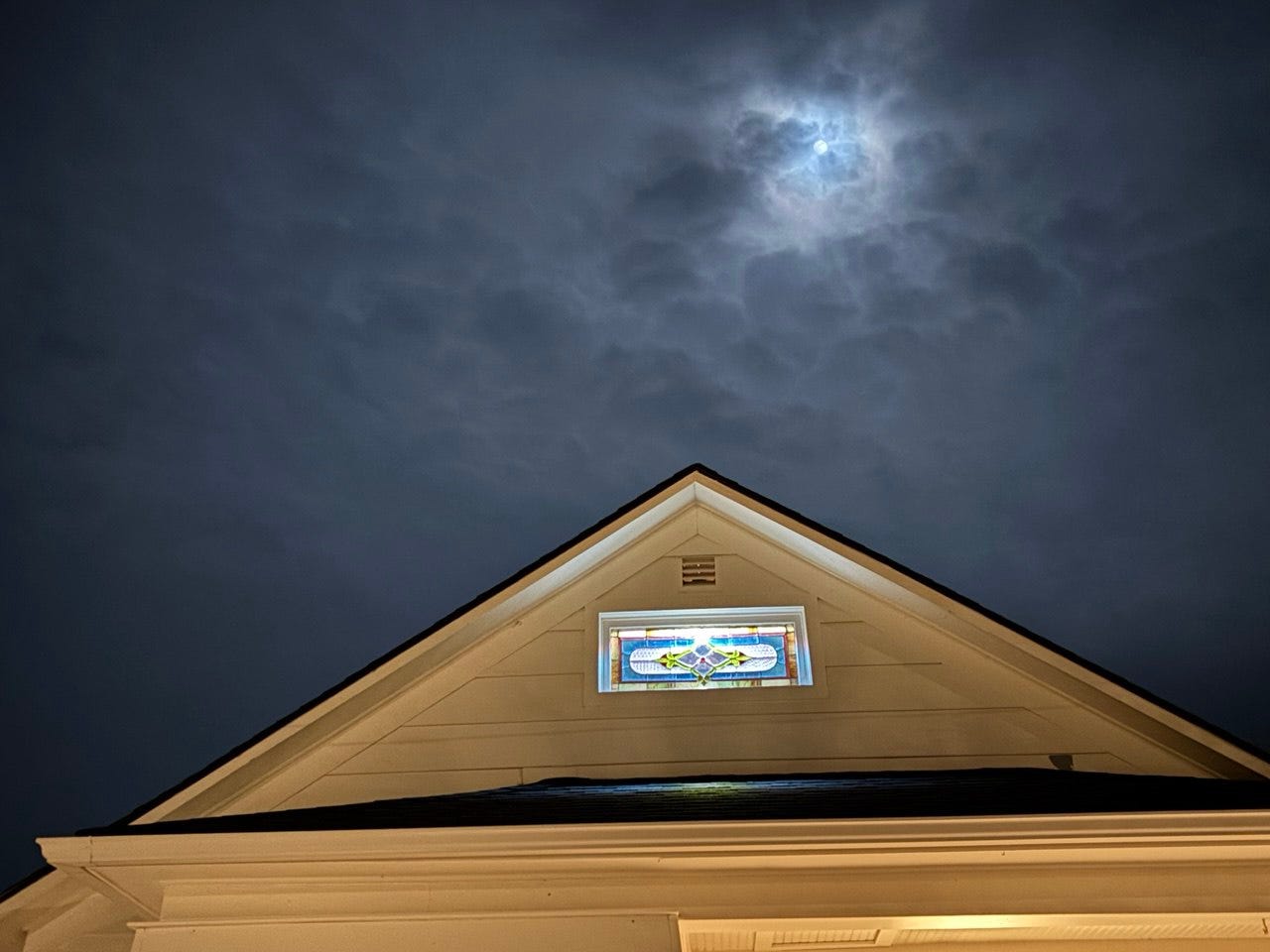
1.31.26
i left some pieces of me along east rosebud creek in roscoe,
a fairly exhausting push into a new plane,
a place worth nurturing like a backyard garden during the first week of spring
2.1.26
at a bar in red lodge, a nearly finished old fashioned tastes like memories of grandpa.
the hurried bartender shatters a wine glass just close enough to my drink to pour me a replacement,
multi-generational luck nods my way
2.2.26
two magpies chasing a third in the south pasture against peach clouds,
surprisingly still dancing the next morning against strawberry skies,
the stakes are high where they fly
2.3.26
four warmth — coffee cup, wood burning stove, radiant floor, and daybreak sun on a grateful cheek
2.4.26
he said he had a ph. d in neuroscience,
yet his most powerful trick was noticing the rising and falling of his breath
2.5.26
a biting wind from the south makes me wonder if we’re too early.
anglers retreating to trucks as we rig up.
the sun prevails, the earthly benches offer protection, and the river’s current bends focus from cold hands to slippery shimmers of 20-inch mystery
2.6.26
does everyone have a favorite stretch of road?
i gladly share the bench with friends on bikes, golden eagles, herds of elk, and the great transfer of energy [wind]
↓ momentum ↓
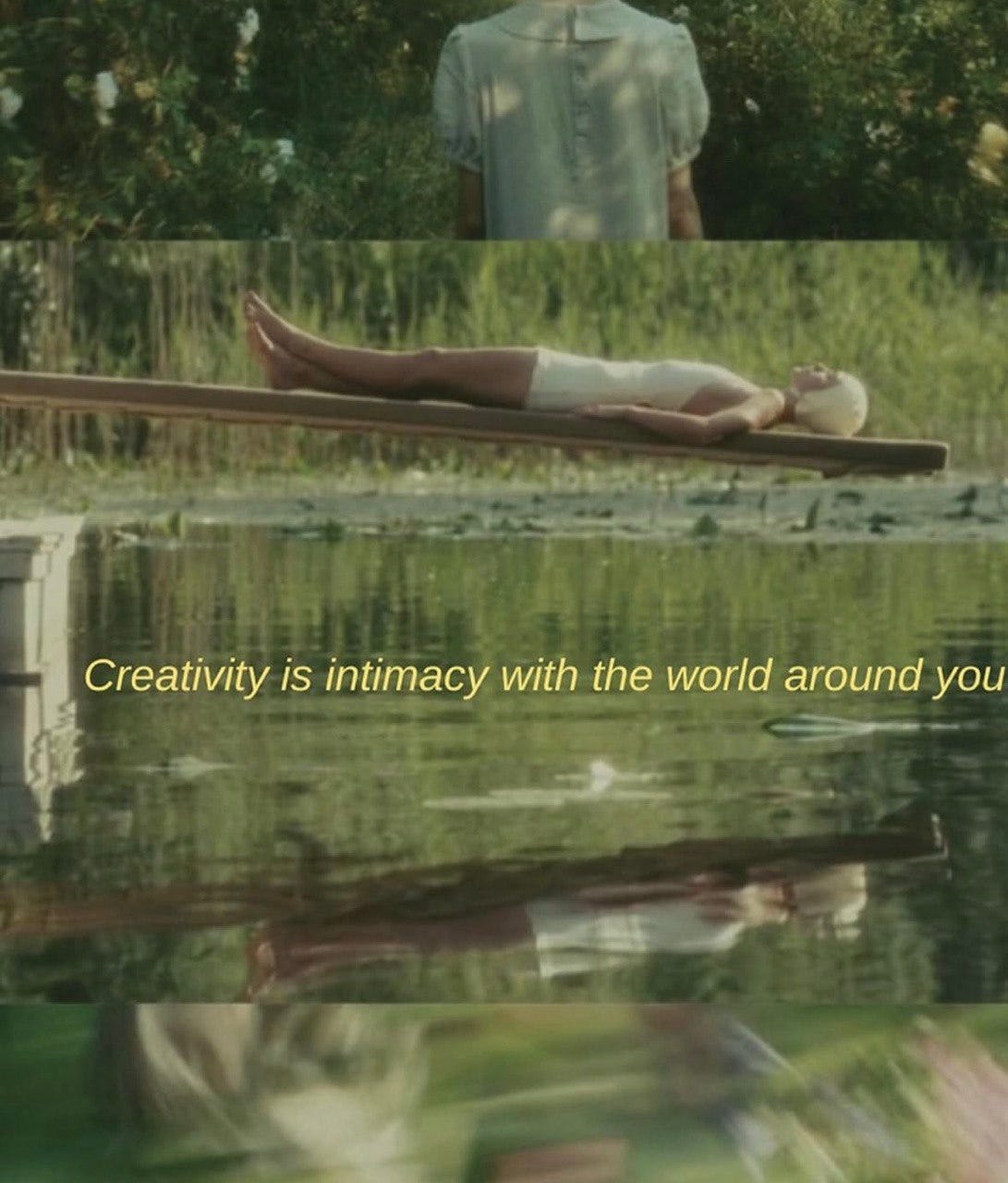
When I Met My Muse
by William Stafford
I glanced at her and took my glasses
off—they were still singing. They buzzed
like a locust on the coffee table and then
ceased. Her voice belled forth, and the
sunlight bent. I felt the ceiling arch, and
knew that nails up there took a new grip
on whatever they touched. “I am your own
way of looking at things,” she said. “When
you allow me to live with you, every
glance at the world around you will be
a sort of salvation.” And I took her hand.
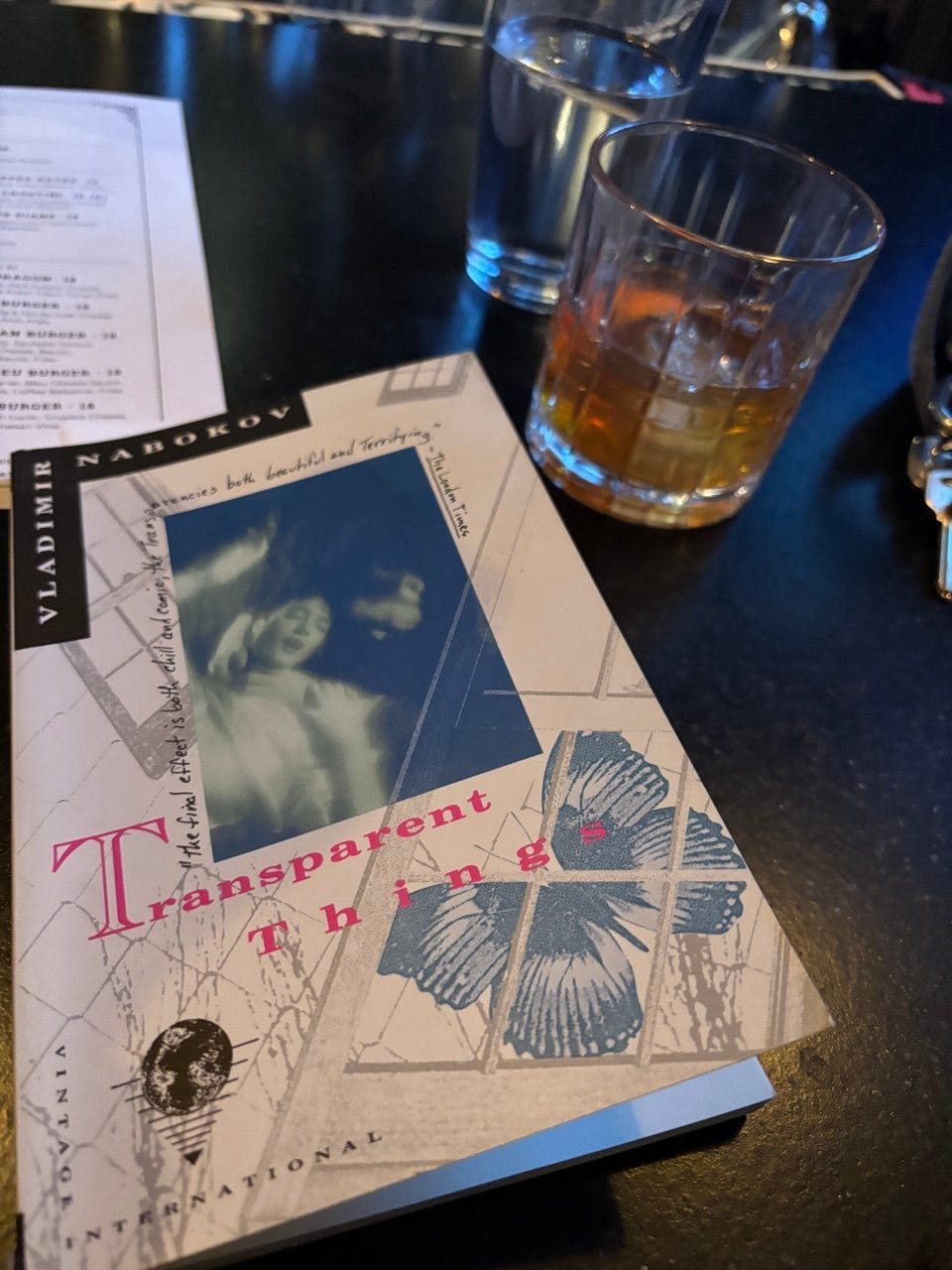
“One should bear in mind, however, that there is no mirage without a vanishing point, just as there is no lake without a closed circle of reliable land.”
– Vladimir Nabokov, Transparent Things
Surrogate Moon
by Jerry Mander
When you are watching television the major thing you are doing is looking at light. The philosopher John Brockman was the first person to put it that way to me, remarking that this in itself represents an enormous change in human experience. For four hours a day, human beings sit in dark rooms, their bodies stilled, gazing at light. Nothing like this has ever happened before.
Previous generations, millions of them, looked at starlight, firelight and moonlight, and there is no doubt that these experiences stir important feelings. There are cultures that spent time gazing at the sun, but there is no culture in all of history that has spent such enormous blocks of time, all of the people together, every day, sitting in dark rooms looking at artificial light.
Anne Waldman, the poet, has suggested that television might itself represent a surrogate moon; a substitute for the original experience for which we, somewhere, continue to long.
If true, this might be merely poignant if it weren’t for some important distinctions between looking at the moon or a fire and looking at television.
Television light is purposeful and directed rather than ambient. It is projected into our eyes from behind the screen by cathode-ray guns which are literally aimed at us. These guns are powered by 25,000 volts in the case of color television, and about 15,000 volts in black-and-white sets.
The guns shoot electron streams at phosphors on the screen. This makes the phosphors glow, and their light projects from the screen into our eyes. It is not quite accurate to say that when we watch television we are looking at light; it is more accurate to say that light is projected into us. We are receiving light through our eyes into our bodies, far enough in to affect our endocrine system, as we shall see. Some physicists say that the eye does not distinguish between ambient light, which has reflected off other surfaces, and directed light, which comes straight at the eye, undeterred, but others think the difference is important.
There is another hot debate in physics on the question of whether light is particulate matter or wave energy. For our purposes, however, what needs to be appreciated is that whether light is matter or energy it is a thing which is entering us. When you are watching television, you are experiencing something like lines of energy passing from cathode gun to phosphor through your eyes into your body. You are as connected to the television set as your arm would be to the electrical current in the wall—about which there is the same question of wave versus particle—if you had stuck a knife into the socket.
These are not metaphors. There is a concentrated passage of energy from machine to you, and none in the reverse. In this sense, the machine is literally dominant, and you are passive.
– from Four Arguments for the Elimination of Television (1978, HarperCollins)